Showing posts with label Kirsten Dunst. Show all posts

Thursday, 24 November 2011

A Career in Ten Movies: Kirsten Dunst

Child stars have an uncertain fate. At best they fall into irrelevance and their careers die a remote and reluctant death. Some accept this blithely, like seagulls flying out to sea, looking back on their superstardom as a dream. At worst, they degenerate into a drink and drugs free fall like a skydive into hell (Lindsay Lohan anyone?). But some child stars weather the storm and somehow emerge the other side of adolescence relatively trauma free and with a glittering career trailing out behind them like a peacock's tail. Kirsten Dunst is one such star, and though for a while it may have seemed that she had flourished in childhood and was merely floundering in light and un-challenging roles thereafter, she has since made a much welcome return in a film that shows some of her earlier, ‘side tracked’ promise finally being pushed to the fore. Its time to delve into ten memorable roles from one of my favourite child stars, the divine Ms Dunst, who has the appeal of being the sunshine starlet, with darker, deeper substance:

1. Interview with the Vampire - Claudia


This was Kirsten's 'break through' role at the tender age of ten, the role with which, without, there might have been no Kirsten. This was an explosive start for the young actress in her role of Claudia, the child vampire, transformed by ‘parents’ Lestat and Louis, part of Lestat’s diabolical scheme to bind Louis to him eternally. To make a child vampire is to break the rules because to trap an ageing spirit, soul and mind in the body of a child is rather than being some Peter Pan like miracle, a type of torture. Sure enough, after coming across a beautiful creole woman, Claudia grows to resent the limitations of her childlike physicality and begins to despite her surrogate parents, whilst plotting revenge on Lestat. She finds herself committing one of the worst sins imaginable for a vampire: killing her maker, and is locked away with fledgling Madeleine as punishment, who having lost her own child, wishes to care for Claudia, who is harbouring fears that her beloved Louis will leave her for the more worldly Armand who tempts him away with secrets of their origin. Kirsten is truly beyond her years in this role, capturing the hopeful and blind acceptance of youth that enable her to be a manipulative and cunning killer, the fury and frustration of adolescence and the cynical, hopeless boredom of adulthood that stretches on forever. Not only did she receive a golden globe nomination for the part, she also got to kiss Brad Pitt, although she was far too young to be suitably impressed...

2. Little Women - Little Amy


After assuring everyone she really can play a 'little woman' in her portrayal of Claudia, Kirsten won the role of ‘younger Amy’ in the movie adaptation of the novel ‘Little Women’ alongside a troupe of other cast members who grew up to have cataclysmic careers. The film follows the trials and tribulations of the March sisters in the aftermath of the American civil war. Kirsten manages to capture Amy’s romantic and idealistic spirit in childhood and looks cuddly and adorable throughout.

3. Jumanji - Judy


Jumanji was one of my favourite childhood films. It had everything: suspense, fear, monkeys and mischief, all contained and controlled by the throw of the dice as siblings Peter and Judy find themselves inadvertently freeing Alan Parrish (who was sucked into the game as a child) and having to continue to the bitter end in order to be rid of the game forever. If you want monkeys riding motorbikes, stampedes, monsoons and mosquitoes, then this film will certainly keep you entertained. Kirsten manages to hold her own with some pretty big names and establishes herself as a certified movie cutie. I think this film was Kirsten’s very own ‘Home Alone’, securing her in the minds of many as a nostalgic part of many adults childhoods.

4. Kiki's Delivery Service - Kiki
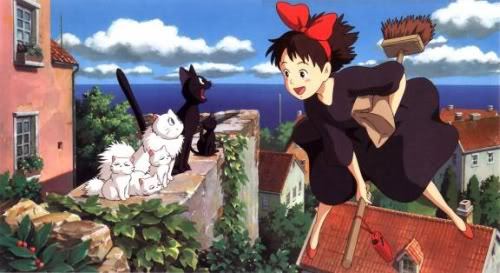


Kirsten might not lend her appearance to this role, but she does lend her melodious voice to the part of witch Kiki (ironically one of Kirsten’s nicknames). This film has Miyazaki’s distinctive style slathered all over it from the bright and chirpy landscapes to the intriguing cast of characters. Witches traditionally must live alone for a year at the age of thirteen and so Kiki travels far from home to Koriko with her black cat Jiji. In order to support herself financially she starts up her own delivery service (hence the film's title). Miyazaki’s films always have a strong moral centre and this one most certainly encourages innovation and independence, particularly amongst young women. Kiki’s year off is littered with peaks and troughs but everything works out in the end and she decides to make Koriko her permanent residence. Miyazaki once famously claimed that children should watch just one movie a year and that movie should refuel their curiosity and encourage them to go out into the world and make memories. This might not be the only film you watch all year, but it should be one of them.

5. Small Soldiers - Christy Fimple


Kirsten establishes herself as ‘underage eye candy’ as cutie-patootie girl next door Christy, the object of Alan Abernathy’s affections. The two ‘would be lovers’ find themselves caught between Gorgonites and the Commando Elite, two sets of warring military themed action figures. If you want to watch Kirsten being attached by dolls and riding a motorbike, you’ll find all that and more here. This is the role in my opinion that for a while ‘doomed’ Kirsten to the sweet and fluffy girl next door parts, and though she shimmers in the role thanks to her all American girl looks, we all know she has far more substance than that!

6.The Virgin Suicides - Lux Lisbon


Lux is the perfect girl next door with a twist and this is the second role after Interview with the Vampire that gives her the opportunity to portray a darker style of teenager. In this mystery that is concluded in the title, the Lisbon sisters take their own lives in unison following the successful suicide attempt of youngest Cecilia and the film simply tells the tale from the perspectives of the neighbourhood boys who loved them, without really examining why. The daughters are beautiful and privileged but suffocated by their small town life and over zealous, fanatically religious parents. Lux is the most blinding of the daughters, androgynous, indefinable, indecipherable, she turns to chain-smoking and promiscuity on the roof after her high school romance with dream boat high school hunk Trip Fontaine falls to pieces and he leaves her cold and alone on the football field after doing the deed. This is a surreal, dreamy tale, deeply unsettling and melancholic that captures all of the paraphernalia and cotton candy inconsistency of young girls on the cusp of becoming women. Blurring the boundaries between the girls innocence and their growing worldliness, the tone of this film is uneasy and disconcerting, but certainly memorable and impenetrable, as we never really understand the sisters motivations for departing this world.

7. Drop Dead Gorgeous - Amber Atkins


You might be noticing a theme emerging here; blonde, blue-eyed, dimpled Kirsten is the maddeningly unattainable girl next door that every boy wants and every girl likes. In Drop Dead Gorgeous, a comedy that falls somewhat flat, she is entered into a beauty pageant with a smattering of other memorable faces i.e. Denise Richards, but the contestants are taking things somewhat seriously, in their attempts to be crowned most beautiful. Styled as a mockumentary, the girls battle it out in the rather elaborately titled: Sarah Rose Cosmetics Mount Rose American Teen Princess Pageant.

8. Crazy/Beautiful - Nicole


This is an interesting take on a love story that blurs the boundaries that exist between ethnicity, culture and class. This relationship is doomed to fail in every way, so polarised are the two romantic leads, and yet somehow their love affair seems to survive (or reach the end credits at least). It's unusual to see Kirsten play the rebellious one in the relationship and deviate entirely from her cookie cutter image.

9. Marie Antoinette - Marie Antoinette
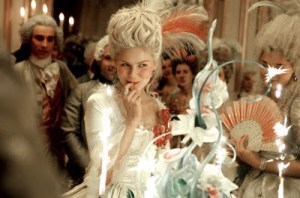


Sofia Coppola produces a crayola world of colour in this retelling of the life of the French Queen Consort (and it takes a whole hell of a lot of artistic licence when it comes to historical accuracy). Kirsten manages to be adorable, precocious and entirely hedonistic as she enjoys the car crash of luxury and extravagance. History mingles with the MTV generation as Marie is portrayed as a more charismatic Paris Hilton or Kim Kardashian. Of course, a life lived with such reckless abandon can't go on forever especially as the French revolution draws near.

10. Melancholia - Justine
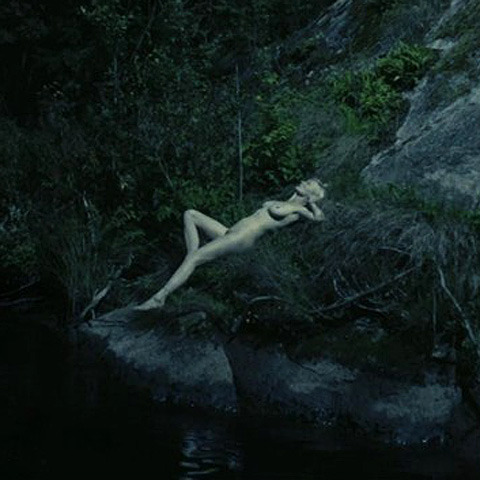


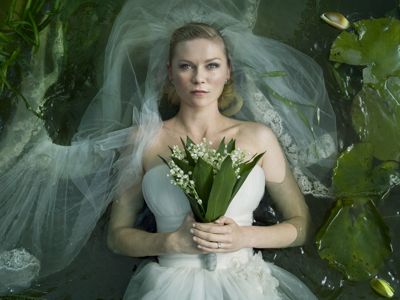
Von Triers movies are mirrors into the innermost workings of his dark and morbid soul. Indeed the insides of his brain must look like a musky old attic. Nonetheless, although he doesn’t exactly make the malady of melancholy mainstream, there is something eerily and obtusely beautiful about Lars perception of the world through the filter of depression. Despite the fact that she was portraying Lars distinctive experience of depression, she surely connected on some level with her own earlier experiences, for which she attended rehab. Melancholia marks a welcome return for Kirsten who is refreshing as Justine, the bride who has everything (much like Dunst) on a surface level, but who cannot find fulfilment or contentment.  Her bleak, flat portrayal was streaked through with real notes of hysteria and a profound if nihilistic view of life in her portrayal of Justine in the midst of a depressive episode, but she still manages to sparkle and shine as the ‘happier’ Justine, still parading her mask of ‘normality’. its unusual to see Kirsten, despite a couple of darker earlier roles, in anything less than bright and beautiful because she suits those roles to a T thanks to her sunny, positive disposition and All American girl ways. This is why she is so suitable to play such a contrasting role, because she shows us that anyone can suffer from depression, no matter their social standing or accomplishments.  Anyone who thought this was the end of Kirsten's career, after Spider man is set to be rebooted, is in for a shock.

Here are a few of Kirsten's roles that didn't make the list, but are still worth a watch:

* Bring it On - Torrance Shipman
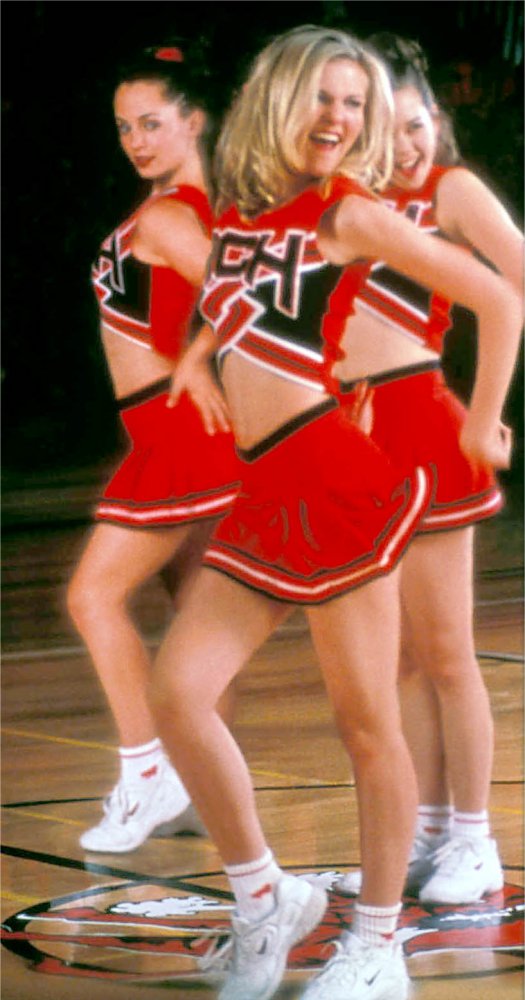


Snarky cheerleaders face off to be the best. Unfortunately for 'The Torros' their former squad leader has swiped their 'winning routine' from a group of rival competitors. The girls must put a rough and ready routine together in order to stand a cats chance in hell of victory.

* Get Over It - Kelly Woods


Girl dumps boy, boy enters play, boy begins to fall for new girl - that's the 1-2-3 synopsis of 'Get Over It'. Of course, Kirsten is the new girl who begins to steal his affections away from his heartbreaking ex.

* Spider-Man - Mary Jane Watson


She might not be the obvious choice for Mary-Jane, but she is the cute girl next door type. The Spider Man series is undergoing a recent reboot, but there are still memorable moments to tune in for, such as the upside down kiss (as pictured).

* Mona Lisa Smile - Betty Warren


Back in the traditional 50's, a free thinking arts professor decides to try to shake loose the Wellesley girls. Betty is harder to break than most, as she has her heart set on the conventional life of a picture perfect wife. When her husband commits adultery, she slowly begins to transform into her true self. It was through staring alongside Maggie G, who spent the duration of the film 'Secretary' crawling across the floor with an envelope in her mouth, that Kirsten was introduced to future love interest, Jake G.

* How to Lose Friends and alienate People - Alison Olsen


A British journalist makes it as a big shot after endless attempts but finds it hard to fit in with all the shiny, sparkly stars that now form the bulk of his social circle. Kirsten plays his eventual love interest, when he can finally ease off the sheen projected by Megan Fox's character.

* Wimbledon - Lizzie Bradbury


A high-ranking tennis pro slowly finds himself falling down the tables. His interest in rising star Lizzie, helps him rekindle his love for the game.

* Elizabethtown - Claire Colburn
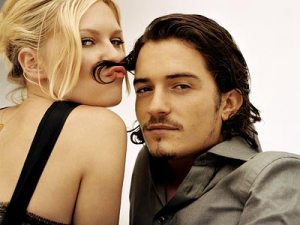


Kirsten gets to sizzle alongside Orlando Bloom as the two embark on a love affair during bizarre circumstances.

* Eternal Sunshine of the Spotless Mind - Mary


This story belongs to Jim Carey and Kate Winslet, as Joel and Clementine, the couple who wish to erase all memories of their traumatic love affair from their minds. Kirsten's side story is that she is being chatted up by a man who is mimicking all of Joel's moves to woo Clementine. She might also have had a turn on the old memory erasure machine herself for having a fling with her married boss...

Thursday, 20 October 2011

Melancholia


Melancholia is the moniker, melancholia is the mood. Its most certainly a case of name reflects nature for the latest offering from Lars Von Trier. Anyone familiar with Von Triers body of work will be aware of his excruciating fascination or preoccupation with depression and mental illness. The landscapes he generates are rife with stark and often brutal imagery and depict a world of hopelessness and fatalistic nihilism. This of course mirrors Von Triers own trysts with depression, directing being his creative outlet. It’s interesting that he uses his vast imagination to conjure characters and situations bogged down with the weight of their own mental irregularities. Just like the old innocuous sign that reads ‘you don’t have to be mad to work here, but it helps’, you don’t need to have experienced mental health struggles yourself to appreciate Von Triers films, but it certainly turns them from pretentious to profound if you have. The slow, near-stasis of his films is not for all, but if you enjoy the journey as much as the destination, then it is quite appealing to lose yourself in his nightmarish worlds.  This film as a dystopian drama follows the apocalyptic fate of the family, and the planet as a whole.


Melancholia also announces the return of Hollywood fluffy bunny Kirsten Dunst, who has dabbled with the dark side with former films Interview with the Vampire and the Virgin Suicides but is more acquainted with lighter, sprightly roles, portraying the all American girl. What’s so appealing about Dunst in this role is that she recently experienced her own fall from grace when she suffered a bout of depression of her own and as such, the role of Justine, the manically depressed bride, takes on a reverence and a realism that Dunst conveys perfectly. If anyone doubted the star of such films as Bring It On or Jumanji was not up to scratch in such a contemplative movie, they are wrong entirely. Dunst is both beautiful and bleak as she brilliantly portrays the annihilating incompressibility and alienation of the fog of depression. Charlotte Gainsbourg makes a welcome return as Justine’s sister Claire. With her melodious, ethereal presence, Claire is the opposite of her sister, having achieved and been able to hold down a conventional life which she seems to find fulfilment in.


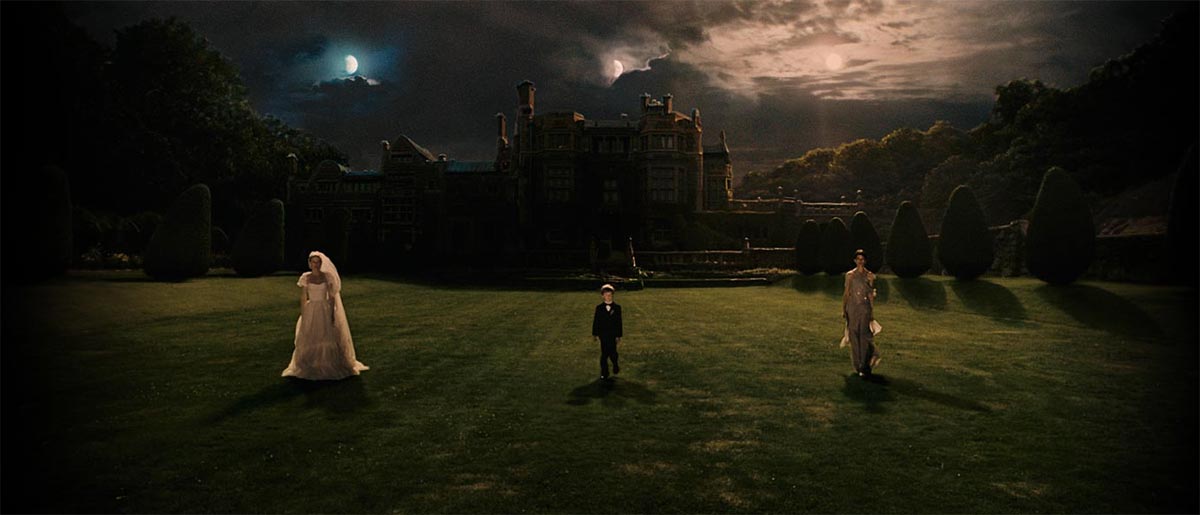
The film begins with what could be considered a prologue or prelude to the events which follow. We are shown a series of frames and sequences without dialogue which set up the characters and give us a taste of what may be to come. Justine in her wedding dress wanders across the green bound by creeping vines; Claire carries her son Leo whilst trudging across the lawn as though it were mud, leaving behind painstaking foot prints. This sets Justine up as the innocent, passive victim, the individual dealing with the ramifications of severe depression, who is trying to move forward with life but is constantly bound and pulled back by the bindings of her illness. Claire meanwhile, is perceived as the care giver, not only to Leo, but to Justine, but she is literally weighted down with the responsibility of having to look after Justine and an illness that she cannot fully grasp nor understand. By centering on the family, Melancholia explores the domesticity of depression and the ways in which it eats away at our ability to enjoy experiences and destroys relationships, establishing itself as a character in family life. In the end, Claire and Justine are equally consumed by the evils of mental illness.  As Justine, Claire and Leo slowly wander across the green, Justine is shadowed by Melancholia, Claire by the sun and Leo by the moon. The haunting and provoking music of Wagner, which builds to an intense and unsettling strain, introduces us finally, to Melancholia.


The story unfolds in two parts with two sisters, two stories and two reactions. The first follows Justine and her slow transcendence from a successful, accomplished newly promoted art director and wife (indeed Justine is on the cusp of endless potential), into the depths of despair and finally into a flat, remote acceptance. Justine transforms from sunshine itself into a husk of a person. There are many hints as to the origin of Justine’s condition. She has a bullying and cynical mother who does not believe in marriage – executed with convincing cruelty by Charlotte Rampling. Her father, though devoted appears brow beaten and forgetful. Her husband (Alexander Skarsgard), picture perfect, does not really understand the gravitas of her illness and thinks that by making an honest woman of her and locating for her the perfect home, he van vanquish her misery. Everyone is intent on reminding Justine that she should smile, he happy and not make a scene. In the splendid and succulent scenery of her opulent surroundings, neat and ordered and yet oddly devoid of warmth and feeling, Justine’s perfectly constructed facade begins to crumble.  The guests recreate a sense of staged happiness, money has been thrown at her, she has been done up to the nines, she has everything she could want for in terms of security and acceptance, and yet Justine, on what should be the best day of her life, begins to plummet and self sabotage in such a way that by the end of the night, she is left with nothing and seems peculiarly reminiscent of a young Miss Havisham in the making; embittered, hateful and exaggeratedly cruel. In her inability to feel happiness, Justine pushes herself into confrontations and adulterous situations, betraying those closest to her for some crumb of feeling. Through her we experience the deep expanse of her despair, with all its overwhelms and underwhelms – bored by her marriage and yet incapable of bathing, she acts with the feckless abandon of someone who knows the end is nigh. Whilst Justine sets about destroying her own future, she also begins to notice a change in the stars. A planet named Melancholia, previously hidden behind the sun, and expected to bypass the
earth, has emerged.


In Part two, Justine has regressed to an incapable, terrified child and the nature of her harrowing dependency on Claire is clear. Claire does her best to juggle the needs of her resolutely scientific husband John (Kiefer Sutherland) and son, whilst patiently tolerating Justine’s extremes of behaviour. Justine speaks of the earth being evil and of knowing that there is nothing outside of their existance.

There are endless scenes of movement for movement’s sake; the sisters ride horses, but Justine can never pass the bridge (she can never escape her depression), she drives the golf cart, trudges through mud, all with the hope that her movement will generate some sense of purpose.  As Melancholia comes closer, the sisters’ roles begin to reverse. Justine calmly accepts and wills the end of Earth to be, whilst Claire falls into a chasm of fear, dread and panic. Justine comes to represent the perfect embodiment of depression, whilst Claire becomes anxiety. In between rests Leo, passive and outside of either’s direct influence, instead a naive, even optimistic observer. Excited as he is to witness the passing of the planet, he cannot will himself to stay awake. This is because whether the world ends or not, this does not really concern him. He is not consumed by inertia, or terror, he is protected by a child’s sense of wonderment and hope. If we take Claire to be represented by the sun, she has literally been blind sighted by the arrival of Melancholia, and in not expecting it, cannot accept that Earth is coming to an end.

Meanwhile Claire, who long ago made peace with her own depression, can accept the eradication of both herself and the wider world. Once it becomes apparent that Melancholia will collide with the earth, Claire wishes to partake in a human ritual; she wants to sit and drink wine on the terrace whilst Justine sings. Justine knows such rituals are meaningless, just as her marriage was. They are hollow shams to create the illusion of happiness, but the gravitas of life does not change. Instead, Justine creates a ‘secret cave’, which evokes childlike magical thinking but also alludes to the faith we place in religion, where the three sit and wait out the impending disaster. Claire hyperventilates in animalistic fear, Justine serenely accepts what is to come, and Leo faithfully closes his eyes and places his trust in their secret cave.


The films angle is interesting. The profound impact of the end of the world is revealed through the vacuum of the fragmented family. We know nothing of the wider world’s perceptions; we only witness Justine and Claire’s experiences. The looming ball that is Melancholia is symbolic of the feelings of depression sufferers – they literally feel the planet is falling down on them and there is nothing left to live for. The collision may destroy the world, but Justine’s life is already ended – she is unable to enjoy it. To further complicate a straight reading of Melancholia as a story about a depressed girl facing the end of the world, Justine seems to be able to tell the future. It is inferred that although Justine has always been predisposed to depression, what may have triggered her extreme episode is the awareness that the world was due to end. She grows preoccupied with the stars, tries to tell her mother she fears something outside of her direct life and seems to promise Leo they will build secret caves long before there is a need to. She can predict the number of holes on the golf course, and the number of beans in a jar. She too can tell that life will end, and that the end is coming. Driven crazy by this knowledge at first, she grows familiar with it with the cool, cold glaze of depression. It also seems poetically ironic that Claire wishes to die out on the terrace drinking wine. The film seems like an ode to the death of capitalism and the self-destruction of the affluent world, represented by Claire’s husband and their luxurious home. The symbolism, colour and visuals of the film are gorgeous and remind me of some of the haunting images concocted by Kubrick.


Bizarrely life affirming, Melancholia is a perfect depiction of the malady of depression, at times feeling poignant, as if solid blocks of despair have been hacked off and held up for all to see. Maddening, infuriating, illuminating, claustrophobic, many sufferers will see themselves in this film, and many well wishers will recognise themselves in the role of care taker Claire. Its not all doom and gloom, there is a dark and subtle kind of humour to be found in this tale, particularly from Udo Kier as the wedding planner, but essentially we are dealing with a beautiful end of the world film, from the eyes of two sisters experiencing two very different realities.